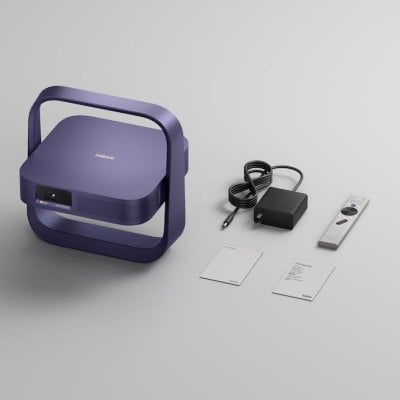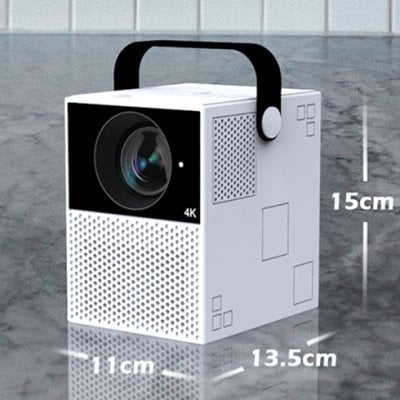
The Bureau of Indian Standards seized 1,350 video projectors from a trading firm in Bengaluru on 9 September and put the value of the haul at roughly ₹5 crore, about $522,000 at Monday’s rate. All of them were sold under the WZATCO brand. The bureau’s allegation is not that the machines are dangerous. It is that they were carrying the BIS Registration Mark in violation of the BIS Act, 2016.
The search was run by the BIS Bengaluru Branch Office at Zeblaze Solutions LLP in Yelahanka New Town, acting on what the bureau described as inputs about misuse of its standard and registration mark. Vinodini Kishore, a Scientist-E and director at the bureau, led the operation with Vijay Kumar, a Scientist-D, and other officers. BIS said legal proceedings would be initiated against the parties concerned on the basis of what the search turned up, and it has not so far named which models were taken.
What the mark is, and what misusing it can mean
A projector is not a free-to-sell appliance in India. It falls under the Compulsory Registration Scheme, which requires the model to be tested against IS 13252 (Part 1) — the Indian adoption of the international safety standard for information technology equipment — at a BIS-recognised laboratory. Only after the bureau issues a registration number may the manufacturer or its authorised Indian representative print the mark and that number on the product and the carton. Importers carry the same obligation, which is why brands made in Shenzhen and sold in Bengaluru have to nominate a local entity to hold the paperwork.
“Misuse of the registration mark” is a wide phrase and the bureau has not narrowed it. It covers a mark applied with no registration behind it, a registration number belonging to a different model, and a valid number printed on units the registration does not cover. Those are very different situations with very different consequences, and until BIS says which one it found, the only thing established is what the bureau itself published, which is that the mark on these 1,350 boxes is alleged not to have been earned by the machines inside them.
The firm in the middle of it distributes two brands
Zeblaze Solutions LLP is not a household name even in India, but it is the commercial spine of more than one budget projector label. Its trade listing puts its founding at 2017, its GST registration at 29AABFZ8674N1Z3, and its business at trading and retail rather than manufacturing. The self-description leaves nothing to infer, because the company says it operates “under the esteemed brand names WZATCO and WANBO,” and its public catalogue runs 21 WZATCO products alongside 18 Wanbo ones. The copyright line on WZATCO’s own consumer storefront names Zeblaze Solutions LLP as well.
That second brand is the part with reach outside India. Wanbo machines have been sold across Europe and on the major online marketplaces for years, and we have been reviewing them since the X1 in 2021. Nothing BIS has said touches Wanbo-branded stock, and the seizure notice names WZATCO only. But the distribution arm now under legal scrutiny is shared, and anyone tracking where entry-level projectors actually come from should file that away rather than read it as a finding against a second brand.
Five crore rupees is a list-price number, not a shelf number
Divide the stated value by the stated count and each seized projector is worth ₹37,037, or about $387. That figure is worth sitting with, because WZATCO publishes its entire price list.
Sixteen models are on the storefront. The cheapest, the Yuva Go, sells for ₹6,990 against a ₹21,990 list price. The dearest, the Legend GT, sells for ₹33,990 against ₹79,990. Every single model in between carries a permanent discount of roughly half to two-thirds off its stated maximum retail price, which is standard practice in the Indian online aisle and one reason MRP has stopped functioning as information there. The average selling price across the sixteen is ₹16,459. The average MRP is ₹38,053.
So the bureau’s implied per-unit value lands within three percent of the mean list price and roughly 125 percent above the mean street price. Valued the way the machines are actually sold, the same 1,350 units come to a little over ₹2 crore. Neither number is wrong; seizure values in India are conventionally stated at MRP. It does mean the headline figure and the commercial exposure are not the same quantity, and in a catalogue built on a permanent two-thirds markdown the gap between them is unusually wide.
The bureau has been walking into warehouses for a while
This is not an isolated raid on an obscure projector seller. BIS has been running search-and-seizure operations against the e-commerce supply chain since at least March 2025, when it spent more than fifteen hours in warehouses run by Amazon Sellers Pvt Ltd in Delhi and pulled out more than 3,500 items either lacking the ISI mark or carrying a counterfeit one, with a parallel action at a Flipkart subsidiary the same week. Those hauls were worth a fraction of this one. The projector case is larger by value than either, and it landed on a brand rather than on a platform.
Why a certification case in Karnataka is worth an American reader’s time
Because the catalogue problem underneath it is the same one on the shelf here, and India happens to have a regulator who walks in the door.
When we looked at the WZATCO Yuva Vibe Pro in August, the brightness claim on the new model was modest and entirely plausible at 1,000 ANSI lumens. One product across on the same storefront, the standard Yuva Vibe was advertised at 14,000 lumens with no unit and no measurement standard attached — fourteen times the figure the newer, dearer model quoted. That page also gave contrast as 6000:1 in one table and 20,000:1 in another. We checked the listings again on Monday. The Yuva Vibe Pro still sits at ₹17,990 against a ₹35,990 list, unchanged from August, and the shop page that carries all sixteen models publishes no BIS registration number anywhere on it.
A regulator cannot do much about a lumen figure invented on a marketing bench, because brightness claims are not what the registration mark certifies. What it can do is check whether the mark itself was earned, and the two failures tend to travel together. The market that produced the $60 projector — the one PMA Research only started counting separately this year, and the one that produced a $125 machine wearing the HP name under licence with a spec sheet its own Amazon listing contradicts — runs on borrowed credibility. A certification mark is the most literal form that borrowing can take.
Neither WZATCO’s storefront nor Zeblaze’s trade listings carried any statement about the seizure as of Monday. The questions that decide how big this gets are the ones BIS has not answered yet: whether a valid registration exists for any of the seized models, whether the 1,350 units are released, relabelled or destroyed, and whether the bureau’s inputs came from a competitor, a customs flag or a buyer who read the carton more carefully than most.