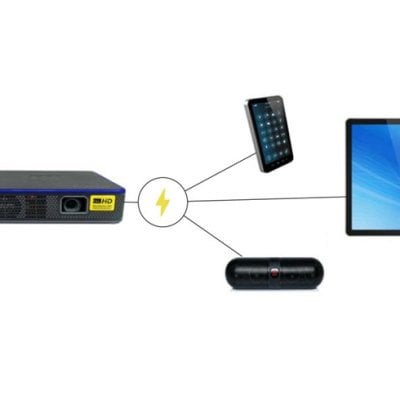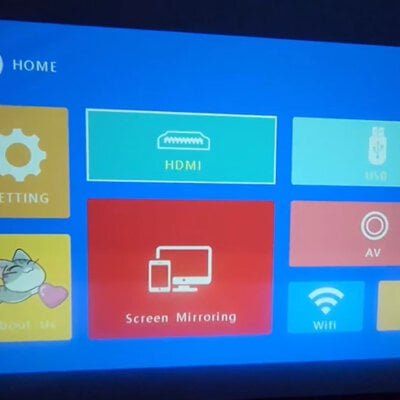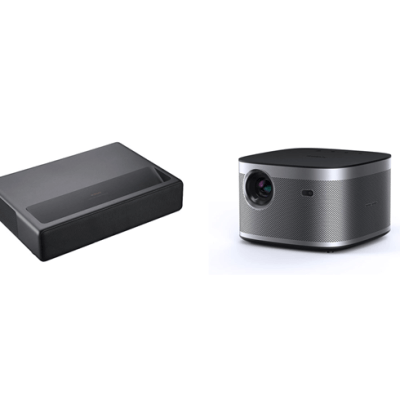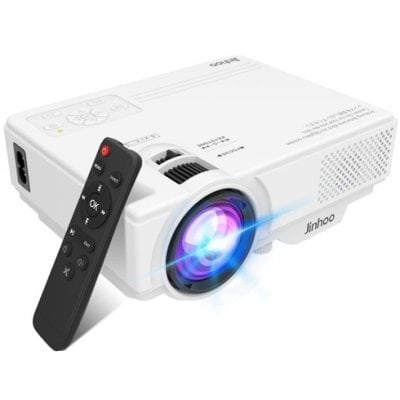
Amazon’s US best-seller chart for video projectors, pulled at 11:23 UTC on August 1, has twelve of its twenty-four entries priced under $60. Eighteen are under $100. The median price on the chart is $62.94, the cheapest machine on it costs $31.98, and nine of the top ten sit between $31.98 and $84.93 — the only exception is a $149.99 Roku-powered model from Aurzen at number seven.
Six of those listings are also more expensive than they were when we last logged them in the final week of July. Most of the increases are small. One is not: the ONOAYO ONO3Pro 2.0 has gone from $257.99 to $402.99, a 56% jump, and its listing title was rewritten at the same time, dropping both the model name and the “3000 Bright” brightness claim it carried a week ago.
A best-seller rank counts units, not revenue, so this chart is not a picture of the projector market. It is a picture of what most Americans who buy a projector this week will actually unbox — and it looks almost nothing like the machines that get reviewed.
Twenty brand names, far fewer products
Twenty distinct brands occupy the twenty-four slots. Nineteen of them are Amazon-native seller brands — YGSKK, ClokoWe, Alwtniet, Maypug, Geylnxng, Sainyer, Thunrlge, DreamFair, WEMI, PANSEBA and Pemoon among them. Only Epson, at number twenty, had a projector business before Amazon Marketplace existed.
The brand count overstates the product count considerably. Three separate listings on the current chart are the same reference design. Number four is sold as the “Alwtniet HY300Pro” and its own bullet points name the silicon — an Allwinner H726 running stock Android 14. Number eight is the “Magcubic 2026 Upgraded HY300PRO.” Number twenty-two is the “HY300Pro PT,” and DreamFair’s copy states plainly that it is “upgraded based on the HY300,” sharing the Mali-G31 GPU. Same board, same Chinese ODM lineage, three logos, three prices: $43.19, $49.99 and $37.69.
That is not a scandal — white-label hardware is how every commodity category ends up — but it does explain why the chart’s customer ratings are useless as a sorting tool. Eighteen of the twenty-four products are rated exactly 4.4 stars. The entire chart, top to bottom, spans 4.2 to 4.5. When a shopper filters by rating, nothing moves.
The prices moved up, not down
Six listings rose between our late-July readings and Saturday morning. AuKing’s long-running budget model went from $54.98 to $69.99, up 27%. AKIYO’s 2026 refresh went from $41.93 to $47.99. Magcubic’s HY350Max — the machine we put head to head against the HAPPRUN H1 a few days ago at $99.99 — is now $109.99, crossing out of the sub-$100 bracket it has held all summer. The chart-topping YGSKK unit added $6, and Maypug added $2. Exactly one listing went down, by ten cents.
| # | Listing | Late July | Aug 1 |
|---|---|---|---|
| 14 | ONOAYO ONO3Pro 2.0 | $257.99 | $402.99 |
| 17 | AuKing 2026 Upgraded | $54.98 | $69.99 |
| 12 | AKIYO 2026 Upgraded | $41.93 | $47.99 |
| 13 | Magcubic HY350Max | $99.99 | $109.99 |
| 1 | YGSKK electric-focus mini | $69.98 | $75.99 |
| 5 | Maypug built-in-apps mini | $49.98 | $51.99 |
Read one at a time these are coupon movements, and sellers at this end of the market change price several times a month. Read together, on the first weekend of August, they point somewhere more specific. American back-to-school buying concentrates in the first three weeks of the month, dorm-room projectors are a recognized part of that basket, and sellers who have been discounting through a slow July have every reason to stop. Whether the ranks hold at the new prices is the thing worth watching over the next two weeks.
The ONOAYO move belongs in a different category. A 56% increase alongside a rewritten title and a deleted brightness figure is not a coupon expiring. When we compared the ONO3Pro 2.0 with the WiMiUS P62 Pro at the end of July, both were on this chart. The WiMiUS has since fallen off it entirely, and the ONOAYO’s price now sits closer to its bigger sibling, the $493.99 ONO5Pro 2.0, than to where it was a week ago.
Epson at $329.99 is the only standardized number on the page
The EpiqVision Flex CO-W01 at number twenty is the outlier in every sense. It is three-chip 3LCD where the rest of the chart is single-chip LCD, it is WXGA rather than “1080P support,” and it quotes 3,000 lumens of color brightness and white brightness — the paired figure that means the measurement follows a published standard rather than a marketing department.
Compare that with what the rest of the chart claims. Number twenty-two advertises 180 ANSI. Number thirteen claims 600 ANSI. Number twenty-three claims 3,000 ANSI at $209.98, which would put it within touching distance of machines costing five times as much. And number four, at rank four on the entire chart, promises “200ASIN” in its title — a typo for ANSI that has evidently been live long enough to sell several thousand units without anyone at the seller noticing. None of these figures come from a third party.
The gap this creates is the real cost of the sub-$100 tier, and it is why our under-$500 guide for 2026 spends as much space on how brightness is quoted as on the machines themselves. A $37 projector and a $330 projector can both print “1080P” on the box; only one of them tells you, in a number you can check, how much light reaches the wall.
Two new entries, two different bets
The chart turned over twice this week. Pemoon arrives at twenty-three with a $209.98 model that bundles a Google TV stick in the box — an admission that licensed streaming is easier to buy than to build, and a workaround for the Netflix certification problem that keeps most Android-based budget projectors casting instead of playing. ELEPHAS arrives at twenty-four at $79.99 with the opposite bet: no smart platform at all, a semi-enclosed optical engine, an all-glass lens, and a pitch aimed squarely at iPhone owners who want a picture on the ceiling and nothing else.
Between them sits the whole argument at this price. The Chinese single-chip LCD platform has become cheap enough that the hardware is no longer where anyone competes; what separates a $37 projector from a $210 one now is whether the software is licensed, whether the focus motor works without you, and how long the LED holds its output. Those are the specifications nobody prints on the listing — and, judging by a chart where eighteen products share the same star rating, not the ones buyers are sorting on either.
The list resets daily. We will be checking it again when the back-to-school window closes.