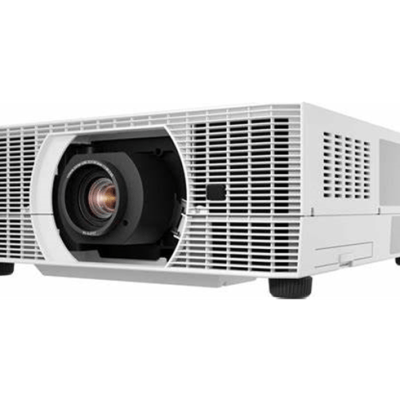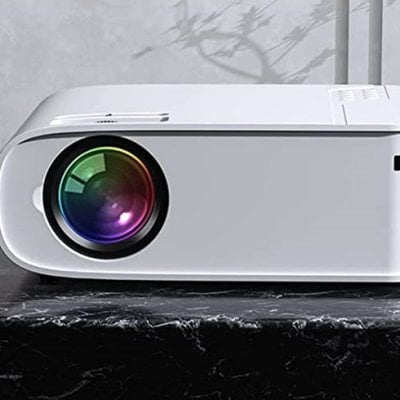
Two of the projectors sitting in Amazon’s best-seller top twenty this week cost within $42 of each other and are, on paper, the same machine: a native 1080p single-chip LCD engine, 4K video decoding, auto focus and auto keystone, streaming apps built in, no dongle required. The ONOAYO ONO3Pro 2.0 was selling for $257.99 at the end of July; the WiMiUS P62 Pro for $299.99. Choosing between them turns out to be less about the picture than about what each brand decided to spend the money on.
Neither brightness number means what it looks like
ONOAYO’s listing calls the ONO3Pro 2.0 “3000 Bright.” Not 3,000 ANSI lumens, not 3,000 ISO lumens — just bright, with a number attached to it. That is the standard move in this price bracket and it should be read as marketing, not measurement.
WiMiUS does better, quoting “real 600ANSI” on the same listing, and the number is printed on the product photography. It is not perfectly consistent — the brand’s own store and at least one specification database list the same model at 800 ANSI — but a figure tied to a named standard, even an inconsistent one, tells you more than a bare number does. For context, 600 ANSI lumens is roughly what a decent 100-inch image needs in a dark room, and roughly half what you would want if anyone in the house insists on leaving a lamp on.
Neither company publishes measured data, and neither projector has been through an independent lab. Treat both as “adequate after sunset, disappointing before it” and you will not be surprised.
What ONOAYO spent the money on: sound
The ONO3Pro 2.0’s headline is dual 50W speakers with Dolby Audio and eARC. That is an unusual amount of amplification for a projector at any price, let alone $257.99, and it is the one specification here that is hard to fake — wattage either moves air or it does not. Buyers back it up: the most consistent theme running through the reviews is that the audio is better than expected, with several describing it as loud enough to hold a backyard gathering without a separate speaker. One recurring detail is the remote, which carries dedicated Netflix, YouTube and Prime Video buttons — a small thing that tells you the platform is meant to be used as shipped.
It is also the lighter of the two by a wide margin, at 1.09 kg, with a carry handle moulded into the top. If the projector is going to move between rooms or into a car, that matters more than a spec sheet suggests.
The complaints are consistent too, and they are software complaints. Several buyers describe the unit freezing after a couple of hours of continuous use and needing a restart, which is the sort of fault that turns a film night into a support call. Others mention needing two or three attempts to get the positioning right before the automatic correction settled. ONOAYO built its own platform — “Smart TV OS 2.0” — rather than licensing one, and that shows in both directions: fast boot and a customisable home screen on the good days, and stability problems on the bad ones.
What WiMiUS spent the money on: connections and consistency
The P62 Pro has two HDMI inputs, one with ARC and CEC, plus two USB ports. On a projector this cheap that is genuinely rare — most of the category ships one HDMI and expects you to unplug the console every time someone wants to use the streaming stick. There are also four M5 mounting points and a central M6 thread underneath, so ceiling brackets and tripods bolt straight on rather than requiring an adapter plate.
Audio is the trade: dual 10W with Dolby processing, which is fine for a bedroom and thin for a garden. Buyers say so directly. The single most repeated criticism in the reviews is the sound, with more than one person recommending that anyone buying it should budget for external speakers from the start. Bluetooth 5.2 works in both directions, so pairing a soundbar is straightforward, but it is an extra purchase.
What buyers praise instead is that the automatic setup simply works. Auto focus and keystone correction squaring the image without intervention comes up repeatedly, described by several people as the feature that made the projector usable for someone who had never owned one. A minority say they still nudge the focus manually now and then. The other frequent note is service: at least one buyer reported the company replacing a unit outright after the USB ports were damaged, with no argument.
The P62 Pro also inherits something the ONOAYO cannot buy — history. It is the successor to the P62, a model that has been on sale long enough to accumulate a very large ratings pool, which is why its 4.4 average sits on a review count out of all proportion to how long this specific version has existed. That is worth knowing in both directions: the average reflects the whole line rather than this exact unit, but a brand that has kept a model selling for years has usually stopped shipping the worst of the manufacturing defects.
Where they land against each other
The ONO3Pro 2.0 carries a 4.3 average from a few hundred ratings on its own listing. The P62 Pro sits at 4.4. Both are typical for the segment, and neither gap is meaningful. The differences that are meaningful are structural: one HDMI versus two, 100W of amplification versus 20W, an in-house operating system versus one built on a platform the brand has been iterating for years, 1.09 kg versus a box you will leave where you put it. Our side-by-side page lays the two specification sheets out in full.
Both sit inside the same broader trend — the collapse of the entry-level projector market in China has pushed a whole tier of factories toward exporting brighter, better-equipped machines at these prices, which is why $300 buys more in 2026 than it did in 2024. Neither of these projectors would have existed at this specification two years ago.
Which one we would buy
For most people, the WiMiUS P62 Pro at $299.99. The extra $42 buys a second HDMI port, a brightness figure attached to an actual standard, mounting hardware that works with anything, and a software platform with a longer track record of not falling over. Add a $60 Bluetooth speaker and the audio gap closes; there is no equivalent fix for a missing HDMI input or a projector that reboots itself in the third act.
Buy the ONOAYO ONO3Pro 2.0 at $257.99 if the projector is going outdoors regularly and you do not want to carry speakers as well. 100W of built-in amplification genuinely changes what a backyard screening sounds like, and at 1.09 kg it is the one you will actually bother to move. Accept that you may be restarting it occasionally, and keep the receipt through the return window.