On 30 July the ONOAYO ONO3Pro 2.0 was selling on Amazon for $257.99. On 1 August the same listing read $402.99, and it still read $402.99 on 5 August. This morning it reads $241.99, with $402.99 printed above it and struck through. Nothing about the machine changed in those ten days. We have pulled Amazon’s US best-seller chart for video projectors every day since 28 July, and on that one listing the number has moved twice inside a week and a half: up $145.00, then down $161.00.
It is not an isolated case. The WiMiUS P62 Pro was $299.99 on 30 July, dropped off the chart entirely at the start of August, and is back this morning at number ten for $196.94 — a third off its late-July number, against a struck-through $429.99. The ONOAYO ONO5Pro 2.0 was $493.99 on 1 August and $296.94 by the 6th, where it has stayed. Three machines, three different stories, one week and a half.
The volatility is concentrated in one price band
The bottom of the chart barely moves. Fifteen of today’s twenty-four entries are under $60 and nineteen are under $100; the median is $54.49 and the cheapest is a $29.99 WISHOLY unit at number six. Those listings do shift, but they shift by four or five dollars, because there is not much room between a $49.99 retail price and what the parts cost. A $43.19 machine cannot fall a hundred dollars.
The band that swings is $150 to $500 — precisely the band a parent shops in when the $50 mini looks too good to be true and a real projector looks too expensive. Only five of today’s twenty-four entries are priced above $100 at all, and between them they have produced every one of the large moves we have logged in the past ten days. That is also the band where the strikethrough does the most work. A shopper looking at the ONO3Pro 2.0 this morning sees $241.99 next to $402.99 and reads a 40% discount. A shopper who looked at the same listing on 30 July saw $257.99 with nothing above it. The machine that is supposedly $161 off today is $16 cheaper than it was before the sale started.
We wrote about this pair on 30 July, when the question was what $42 changed between them. The gap between the two is now $45.05, in the other direction: the WiMiUS is the cheaper machine this morning, having been the dearer one when we compared them. Any comparison written against a price in this part of the chart has a shelf life measured in days.
The one on the chart that did not move
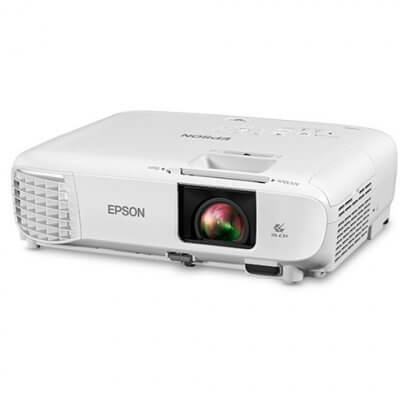
The Epson EpiqVision Flex CO-W01 came back onto the chart this morning at number twenty-four, having fallen off it around 5 August. Its price is $329.99. It was $329.99 on 1 August, and the struck-through $399.99 above it has not changed either. It is the only three-chip 3LCD machine on a chart otherwise built entirely from single-panel LCD units, and it is also the only one whose number behaves like a retail price rather than a lever.
That difference is structural, not moral. Brands that sell through dealers, big-box retailers and their own storefronts as well as Amazon cannot reprice one channel by 40% on a Tuesday without breaking the others. Brands that exist only as an Amazon listing can, and do, several times a month. Neither approach tells you anything about picture quality. It tells you what the number on the page is for.
The same holds off the chart. The Dangbei N3 Max has been $559.99 since we added it to our database on 4 August and is $559.99 this morning; the DBOX02 has held $1,199.00 since we checked it on the 7th. Neither appears in Amazon’s top twenty-four, which is a chart dominated by machines under $100, and neither needs to. What a steady price buys the shopper in this category is the ability to compare specifications instead of timing: the N3 Max publishes 1,000 ISO lumens rather than a house brightness figure, ships VIDAA with officially licensed Netflix rather than a sideloaded app, and lists automatic focus and keystone and 12W Dolby Audio. You can hold those against a rival’s numbers today and the comparison will still be valid next week, which is more than can be said for anything in the $150-to-$500 band right now.
Why now
Two things are pressing on this part of the market at once. American back-to-school buying runs through the first three weeks of August and the dorm projector is a fixture of it, so sellers have every reason to move numbers around while traffic is high. Underneath that, component costs are going the other way: memory and flash contract prices have been climbing all year, and we looked at what that did to Roku’s hardware pricing on 5 August. A seller who expects to pay more for the same board in the autumn has a reason to establish a higher list price now and discount from it later.
Whether that is what is happening here is not something a price chart can prove. What the chart does show is that on this part of Amazon, the strikethrough is not a memory of what the machine used to cost. The ONO3Pro 2.0’s real trading range over ten days was $241.99 to $257.99, and the $402.99 above today’s price was on the page for less than a week. The number worth reading is the one you are being asked to pay, compared against what the same machine cost a fortnight ago — and for the next three weeks, that comparison is worth making the day you buy rather than the day you start looking.