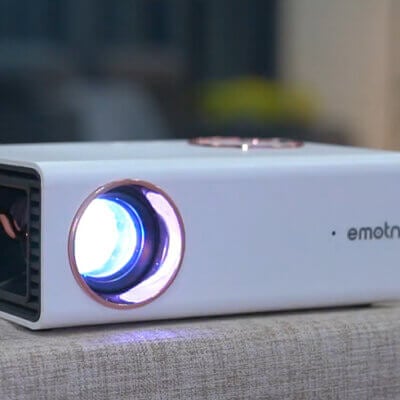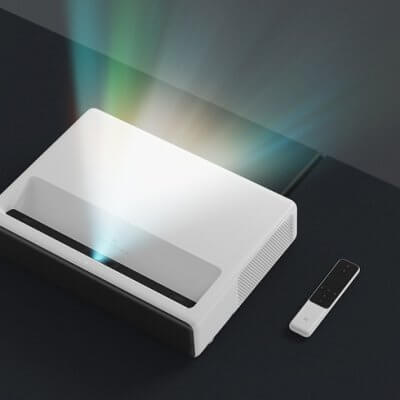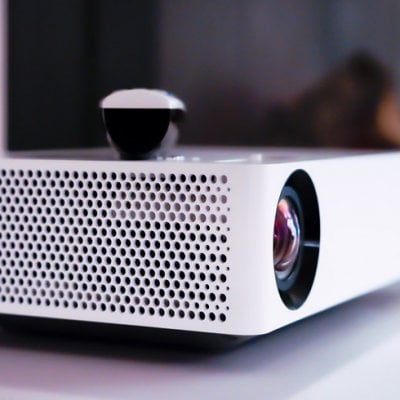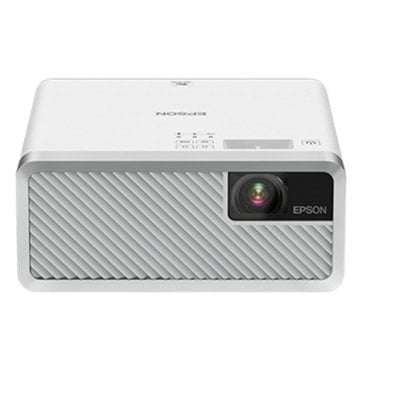
XGIMI opened U.S. pre-orders for its HORIZON 30 series on Monday, October 12, and the cheapest of the three models costs less than the projector it replaces. The HORIZON 30 Pro is $1,899 through October 31, the HORIZON 30 Max is $2,499 and the HORIZON 30 Ultra Max is $2,999, all sold only through XGIMI’s own store. From November 1 the prices go to $2,499, $2,999 and $3,499. On the same day, the outgoing HORIZON 20 Pro was listed at $1,999 on both Amazon and XGIMI’s site.
Every pre-order ships with a choice of XGIMI’s floor stand or ceiling mount, two pairs of 3D glasses and a $500 coupon toward the company’s Ascend screen. XGIMI has not said when pre-ordered units leave the warehouse, only that open sales begin on November 1.
All three models use an RGB triple-laser light source, a 0.47-inch DMD with pixel shifting to reach 3840 x 2160, and a dual iris that adjusts with the scene. The Pro is rated at 4,800 ISO lumens and 8,000:1 native contrast, the Max at 5,300 ISO and 9,000:1, and the Ultra Max at 6,000 ISO and 10,000:1. Brightness and contrast are the only differences between them. Each one displays 4K at 120Hz, supports Dolby Vision, HDR10+ and IMAX Enhanced, and runs Google TV with licensed Netflix. There are two HDMI inputs, one with eARC, plus USB 3.0 and Wi-Fi 6, and the speakers are a pair of 12-watt Harman Kardon drivers with DTS Virtual:X.
XGIMI’s product pages quote 1ms input lag. Ecoustics, working from the company’s briefing material, puts it at 1.9ms with a 4K/120Hz signal, which is the figure console owners should plan around. VRR, ALLM and AMD FreeSync are all listed. Film content at 24 frames per second is shown at 120Hz with each frame repeated five times, so there is no 3:2 pulldown judder and no frame interpolation unless you switch it on.
Same box, new light engine
Put the spec sheets side by side and the chassis has not changed. The HORIZON 30 measures 249 x 298 x 190 mm, exactly the dimensions XGIMI lists for the HORIZON 20 Pro. The gimbal stand that tilts and rotates, the 40- to 300-inch image range, the optical zoom with lens shift and the speaker pair all carry over. What is new sits inside: more light, the iris pair, and a display path that actually refreshes at 120Hz in 4K. On the HORIZON 20 Max the HDMI 2.1 port would accept a 4K/120 signal but the picture stayed at 60Hz, a limit French site Frandroid pointed out after seeing both machines at IFA.
The other addition is Lens Memory, which stores five zoom and shift positions. That matters mostly to people with a 2.35:1 scope screen who want to switch between widescreen films and 16:9 TV without walking to the projector.
Against the model it replaces, the 30 Pro’s pre-order price is the story. The HORIZON 20 Pro is rated at 4,100 ISO lumens and 4K at 60Hz. It sold for about $1,619 on Amazon in mid-September and has since gone back up to $1,999. For the next three weeks, XGIMI’s newer machine is $100 cheaper, 700 ISO lumens brighter and twice as fast on refresh. After November 1 the 30 Pro takes over the 20 Pro’s old $2,499 list price, so XGIMI is keeping the price ladder and changing the rungs.
What China paid in April
The HORIZON 30 is not new hardware in China. XGIMI launched it there on April 29 as the RS30 series, in four versions rather than three, and the Chinese spec sheet does not match the American one.
According to IT Home’s launch report, the RS30 Pro is rated at 3,600 ISO lumens and costs 8,822 yuan. The RS30 Pro Max is 4,800 ISO at 10,199 yuan, the RS30 Ultra is 6,100 ISO at 11,499 yuan and the RS30 Ultra Max is 6,800 ISO at 13,499 yuan. The first three are listed at 4,000:1 native contrast and the Ultra Max at 7,000:1. Chinese launch material also lists a 240Hz refresh rate, which the U.S. pages do not mention.
Matching by brightness, the U.S. HORIZON 30 Pro lines up with the RS30 Pro Max, since both are rated at 4,800 ISO. Take China’s 13 percent VAT off 10,199 yuan and convert at Monday’s rate of about 6.71 yuan to the dollar, and the Chinese machine works out to roughly $1,350 before tax. The U.S. version is $1,899 on pre-order and $2,499 after it, about 41 percent and 86 percent more. At the top, the RS30 Ultra Max comes to about $1,780 on the same math, against $2,999 and $3,499 here.
The contrast numbers are harder to reconcile. At the same 4,800 ISO, the Chinese sheet says 4,000:1 and the American one says 8,000:1. The U.S. Ultra Max is rated 800 lumens dimmer than China’s but 3,000:1 higher in contrast. One plausible reading is that the two markets measured with the iris in different positions, since a smaller aperture trades light for contrast. XGIMI has not explained the gap, and nobody has published measurements yet, so treat both sets as claims for now.
Europe falls between the two. Frandroid reports that XGIMI expects the series in France before the end of the year at around €2,000, €2,500 and €3,000. Remove France’s 20 percent VAT and the entry model is about $1,860, close to the U.S. pre-order price.
The $1,899 slot is getting crowded
The HORIZON 30 Pro’s pre-order price is identical to the $1,899 JMGO set for the Iris Ultra three weeks ago. Both are gimbal-mounted triple-laser 4K projectors with 120Hz and lens shift. On paper XGIMI claims more, with 4,800 ISO lumens and 8,000:1 against the Iris Ultra’s 4,500 and 7,000:1, and it adds a second iris and Dolby Vision. JMGO’s machine has the advantage of timing. Its U.S. shipments are scheduled for the second half of October, while XGIMI’s open sales do not start until November.
Both companies are also putting laser modules with the same name into Chinese products. The RS30 uses a laser engine called QuaLas42, built from 20 laser diodes. That same QuaLas42 label is on the spec sheets for JMGO’s N5S Turbo, which goes on sale in China this week, and Hisense’s Vidda M2 Pro Flagship Edition. None of the three brands has said who makes it. If it is one supplier’s part, the brightness race among Chinese triple-laser projectors depends more on how many diodes a company buys than on in-house optics, and the real differences between these machines come down to lenses, irises, processing and price.
That makes the contrast question the one to watch. Brightness from a shared light engine is easy to match. Native contrast from a dual-iris design is the number XGIMI is using to separate itself from JMGO and Hisense. Whether a HORIZON 30 Pro on a test bench reaches 8,000:1, or something closer to the 4,000:1 printed in China, will show which spec sheet to believe.