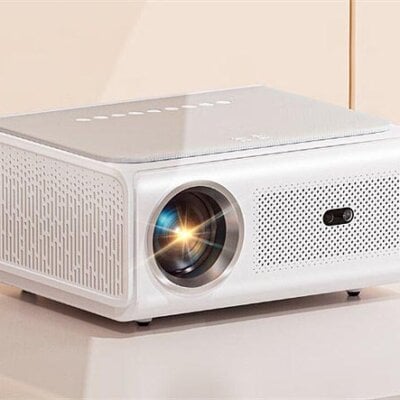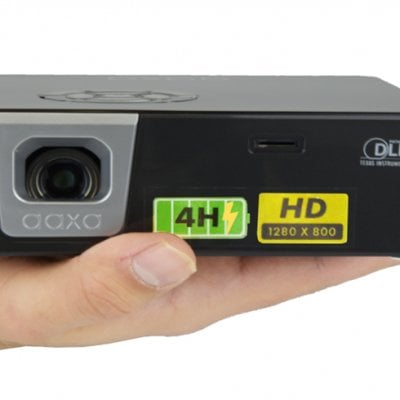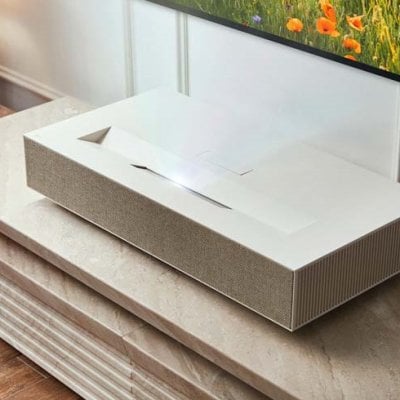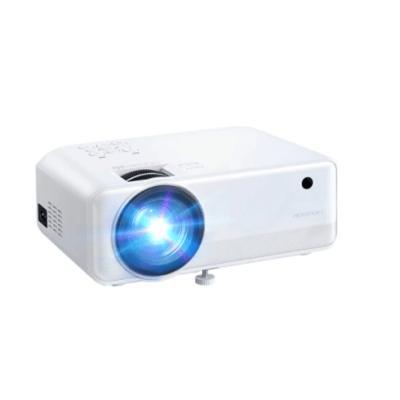
The Shanghai chip company that Pixelworks sold to a VeriSilicon-led group in January has a working prototype of a system-on-chip for smart projectors, built to drive LCoS micro-displays made by Nanjing Chipvision Electronics. The chip went on show this week on Chipvision’s stand at CIOE, the China International Optoelectronic Exposition in Shenzhen (September 9 to 11), and the company said on September 10 that it had finished pre-production validation and could now be delivered commercially. It named no customer, no price and no shipping date.
In China the company trades as Zhudian Semiconductor, the Chinese name Pixelworks used there. According to the Chinese-language announcement, the new part combines autofocus and automatic keystone correction on one die with the motion-processing and colour-management engines the company has been refining for more than twenty years. It also adds noise reduction and a skin-tone protection mode. The company says that class of picture processing had previously appeared only in flagship projectors and professional cinema equipment, and that this is its first use in consumer smart projectors.
The chip is designed to be sold alongside Chipvision’s LCoS optical engine. The pitch for the pair is image quality, small size and low cost at the same time, with no trade-off between them. The companies aim it at smart projectors first. The same list also names AI toys, AI desk lamps, embodied-AI robots and in-car projection, and says a manufacturer could use the chip and engine to add a projected screen to a product that has never had one.
What was on the Chipvision stand
Chipvision is based in Nanjing’s Jiangbei New Area and runs its own LCoS production line. Before the show opened, it said its headline exhibit would be a 0.26-inch LCoS microdisplay chip, shown with Micro LED and Micro OLED driver backplanes that run from 0.13 to 0.7 inches. Neither company has published the resolution, frame rate or light output of the 0.26-inch panel, and none of those can be inferred from its size.
The partnership began with a narrower goal. When the two announced it in November 2025, the stated aim was LCoS display drivers and SoCs for AR glasses. The announcement cited Meta’s decision to build its Ray-Ban Display glasses around LCoS with an array waveguide as a signal for China’s LCoS makers. Projection was added afterwards. By late March the two were reporting that joint debugging of a smart-projection solution was finished, and this week’s prototype is the result.
A 3LCD incumbent under a new owner
Who is selling the chip matters more than usual here. When VeriSilicon announced the takeover in October 2025, it valued 100 percent of the Shanghai company at 950 million yuan. The deal was structured through a special-purpose vehicle in which VeriSilicon holds 40 percent. VeriSilicon described the target as a developer of visual processors for phones, video transcoding chips and main control chips for 3LCD projectors, and put its share of that last market above 80 percent.
Pixelworks closed the sale on January 6. A filing with the SEC puts the net cash to Pixelworks at about 357 million yuan (roughly $51 million), with a further 8.7 million yuan held in escrow pending Chinese tax matters. The US parent now describes itself as a pure technology-licensing business built around its TrueCut Motion format for film and streaming. In practice, the 3LCD projector-chip business went with the Shanghai company to its new owners.
That makes this SoC more than one more Chinese chip announcement. It comes from the supplier that already sits inside most three-panel LCD projectors, now reaching into a different light-valve technology. For readers who want the background, our explainers cover how DLP and 3LCD differ and where LCoS sits against DLP.
Where LCoS would land in a cheap projector
In home projectors, LCoS has mostly meant the expensive end: Sony’s SXRD and JVC’s D-ILA machines, whose main selling point is native contrast. The budget end of the market goes the other way. It runs on single-chip DLP and, increasingly, on single-panel LCD. That is the technology inside boxes like the 999-yuan REDMI Projector 5, and it is the category analysts have only recently started counting. A 0.26-inch reflective panel paired with a chip that handles focus, keystone and image processing aims at neither end. It is a bid to make a projector engine small and cheap enough to fit inside objects that are not projectors.
The order of that application list is telling. Toys and desk lamps sit right next to smart projectors, which suggests the volume the companies expect is in embedded displays rather than in living-room boxes. It also fits the direction component suppliers have been taking all year. Light-source maker Appotronics pulled back from consumer projectors as prices collapsed, and the companies that are still expanding want to supply a part rather than sell a finished product.
For anyone buying a projector, the claim to watch is the one about picture processing. Motion compensation and colour management account for much of the difference between an expensive projector’s picture and a cheap one’s at the same resolution. If a meaningful share of that processing survives on a part priced for a desk lamp’s bill of materials, the gap narrows. Whether it does will not be clear until a brand ships a product with the chip inside and someone measures it. Neither company has said when that will happen.