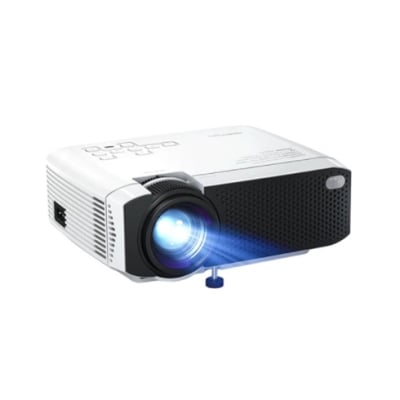
Dangbei put the N3 Max on sale in Japan on Wednesday at 89,900 yen, and from August 28 the machine drops to 69,900 yen on Amazon Japan and Rakuten for a limited launch window, roughly 22 percent off. The company is selling it as the first projector in Japan to ship with VIDAA on board, which is the part of the announcement worth more than the price.
Why the operating system is the headline
VIDAA is Hisense’s smart-TV platform, and Dangbei has been using it as the way around the single most annoying limitation of the projector category: streaming licences. Netflix does not certify most projectors, so buyers end up plugging in a Fire Stick or a Chromecast and running two remotes for the rest of the machine’s life. On the N3 Max, Netflix, YouTube, Prime Video and Disney+ run natively, and Dangbei lists TÜV Rheinland security certification and a cold boot of about 20 seconds alongside them. AirPlay is included for iPhone, iPad and Mac.
That combination is not unique to Japan — the same platform is on the N3 Max that has been selling in the United States since early August — but Japan is a market where the workaround has been especially entrenched. The portable projector shelves there are full of Android-based machines that cannot legally show a Netflix account, and the stick has become an assumed accessory rather than a defect. A licensed player in the box changes the arithmetic of what the box costs.
One cable, no brick
The hardware underneath is a single-panel LCD design built around a 4.45-inch STN LCD panel and an LED source, rated at 1,000 ISO lumens with a 1,500:1 full on/off contrast ratio. Resolution is native 1,920 by 1,080 with 4K decoding for incoming signals, and HDR10 and HLG are both supported. Dangbei quotes an image range of 60 to 150 inches from a 1.15:1 throw. The optical path is fully sealed, which is the specification that matters most on a machine designed to be carried between rooms — dust ingress on an open light path is what turns a two-year-old LCD projector into a speckled one.
Connectivity is one HDMI 2.0 port with eARC, two USB 2.0 ports and a 3.5mm output, with Bluetooth for using the 12W Dolby Audio speaker pair on its own. There is a low-latency game mode. There is no battery, and Dangbei is explicit about that, but the power supply is built into the chassis rather than hanging off it, so the machine travels with one AC cable and nothing else. At 264 by 202 by 218mm and 3.6kg, it is a two-hands-and-a-cable object rather than a bag object.
Six automatic functions handle setup: time-of-flight autofocus, keystone correction, screen fit, obstacle avoidance, wall-colour compensation and an eye-protection mode that dims the lamp when someone walks through the beam. None of that is new to Dangbei — it is the InstanPro package the company has been shipping across its range — but the wall-colour step is the one that earns its place here, because a projector sold on the promise of being moved from the living room to the bedroom will be pointed at whatever paint is available.
The gimbal keeps spreading
The N3 Max sits on a 180-degree integrated gimbal, so the projector points at a wall or straight up at a ceiling without a tripod, a stack of books or a separate mount. Dangbei has now put that same mechanism into three very different machines in three markets inside a month. In China the company priced the RX10 at 5,499 yuan last week with an ALPD laser engine and 4K resolution. In the United States the N3 Max is the 399.99-dollar entry, and it lines up against machines like the NexiGo PJ40 Pro at that level. In Japan it is a 1080p LCD at a mid-market price. The light engines and the resolutions differ; the shape does not.
That consistency is doing something for Dangbei that the individual specifications are not. The gimbal is the part of the product a shopper recognises across a shelf, and it is the part that answers the question people actually ask about projectors, which is where the thing is supposed to sit. Rivals have gimbal models too, but they treat the format as a niche within a lineup. Dangbei is treating it as the default.
Three markets, three numbers
The Japanese pricing is worth laying out properly, because there are three figures in circulation and they are all real. The press announcement quotes 89,900 yen as the list price. Dangbei’s own Japanese store is currently showing the machine at 82,900 yen, tax included, marked down from 87,800. And the Amazon and Rakuten promotion that opens on August 28 takes it to 69,900 yen. At the 159.24 yen to the dollar the currency was trading at on Tuesday, that promotional price works out to about 439 dollars.
The same projector is 399.99 dollars on Amazon in the United States today, down from the 559.99 it carried when we first logged it earlier this month — a genuine cut, and one of the few real ones we found when we went through a month of price history ahead of Labor Day. Japanese prices are quoted with consumption tax already in them and American ones are not, so the gap between 439 and 399.99 is smaller in practice than it looks on paper. Even so, the launch window is where the Japanese number is competitive, not the list price sitting above it.
What the 69,900 figure does not tell anyone yet is whether it is an introduction or a destination. The United States answered that question the hard way: the N3 Max arrived at a number and then found a lower one within a month, and the specification sheet never changed in between. If the Japanese street price settles near 70,000 yen once the promotion closes, Dangbei will have brought a licensed-Netflix projector into the country at a price the incumbent stick-and-Android machines cannot match on total cost. If it snaps back to 89,900, the interesting part of this launch will have lasted five days.