In the evolution of projection technology, the optical system has always been the key factor determining a projector’s image quality ceiling. As the “first gateway” for light transmission, the lens plays a decisive role in resolution, color accuracy, and dynamic performance.
For years, the home projector market has faced a hidden challenge: due to cost and technical constraints, most consumer models use standard-grade lenses. While adequate for smaller images, these lenses often struggle with large-scale projection—issues such as edge blurring, noticeable chromatic aberration, and poor glare control can significantly limit clarity.
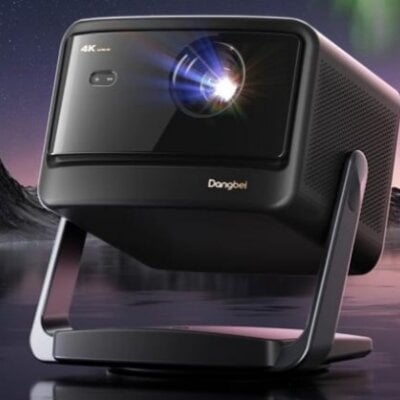
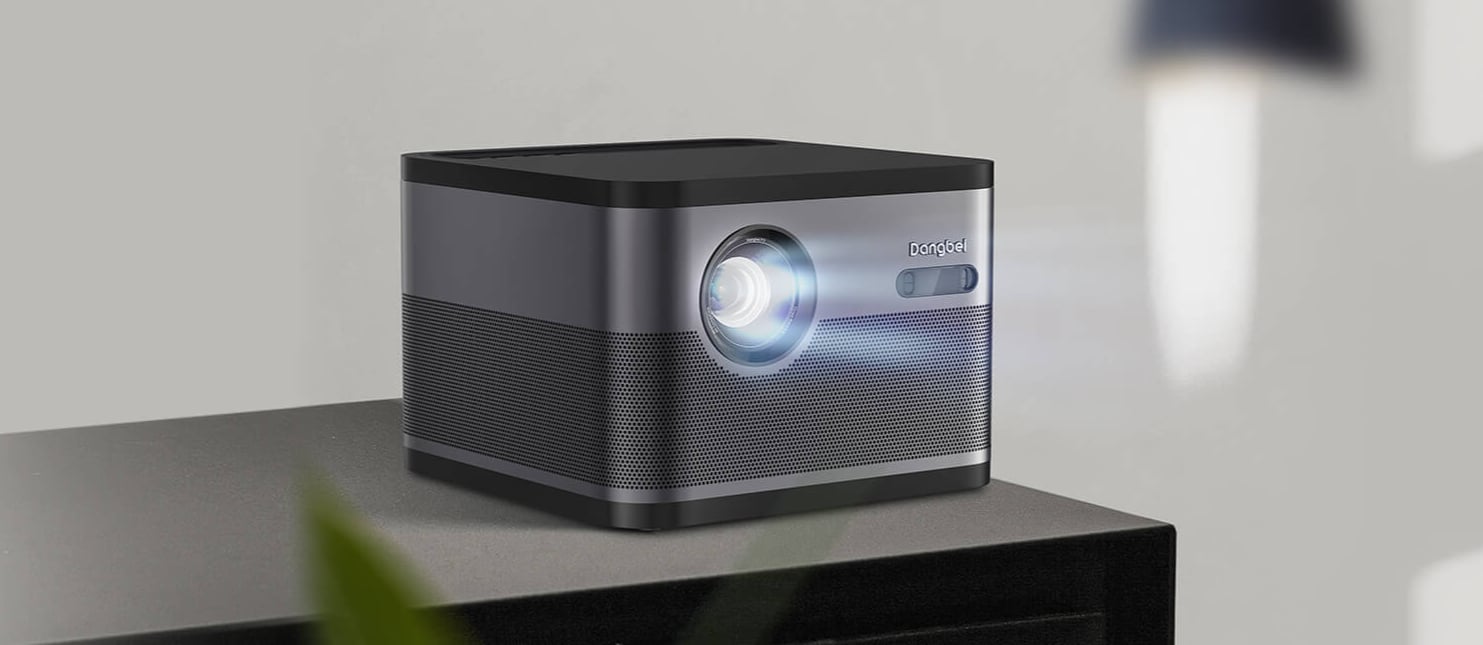
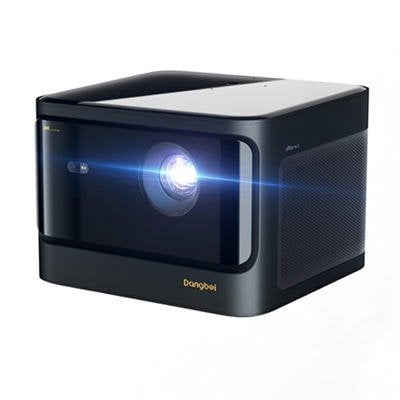
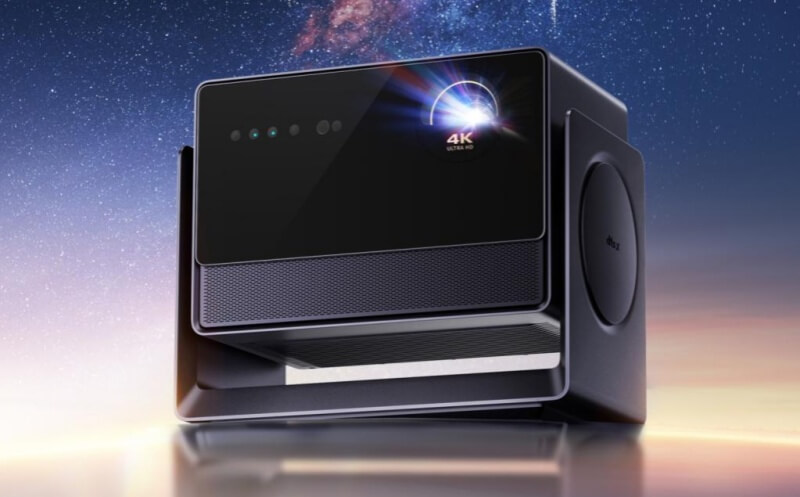
Now, Dangbei has made a breakthrough with its latest S7 Ultra Max, introducing the Matsubayashi Master Gold Ring Lens—a lens technology previously reserved for high-end, professional-grade projectors costing over $10,000—into a home entertainment setting. Let’s explore how this lens transforms the S7 Ultra Max into a true home cinema powerhouse.

1. From Engineering-Grade Exclusivity to Home Projectors
When discussing high-end projector lenses, industry professionals often think of brands like Barco and Christie. These lenses are designed for massive screens in cinemas, control centers, or museums, maintaining exceptional sharpness and stable color reproduction even at hundreds of inches.
The Matsubayashi Master lens comes from this same professional lineage. Developed by Matsubayashi Optical—well-known within the optical industry for its expertise in camera and projection lenses—it was originally engineered to combat optical loss and image degradation in large-scale projection environments.
By contrast, most consumer projectors use plastic or standard glass lenses with 5–8 optical elements and basic anti-reflection coatings, which are easily affected by complex lighting. The Matsubayashi Master lens takes a radically different approach:
- Material & Craftsmanship Upgrade
Crafted from military-grade Extra-Low Dispersion (ED) glass and polished with nanometer-level precision (surface flatness error ≤0.1 micron—about 1/500 the thickness of a human hair), it minimizes light scattering for maximum sharpness. - Advanced Optical Structure
Featuring an 11-group, 16-element design with 3 ED glass elements and 2 aspherical lenses, it corrects multiple aberrations including spherical and coma distortion. Until now, such a configuration was exclusive to ultra-high-end professional projectors.
Due to high R&D costs and production complexity, no consumer projector brand had adopted such a lens—until the launch of the Dangbei S7 Ultra Max.
2. Image Performance: From Detail Precision to Environmental Adaptability
Integrating the Matsubayashi Master Gold Ring Lens into the S7 Ultra Max results in a major leap in “image tolerance”—the ability to maintain quality under varying sizes and environments. Whether projecting a modest 100-inch image in a living room or a 150-inch display in a dedicated theater, the S7 Ultra Max delivers consistent sharpness, detailed textures, and robust light control from center to edge.

2.1 Resolution: Zero-Loss Detail at Large Sizes
The lens uses a high-precision aerospace-grade housing with 3 ED lenses individually calibrated for the RGB laser light source. This ensures accurate 4K reproduction with exceptional clarity.
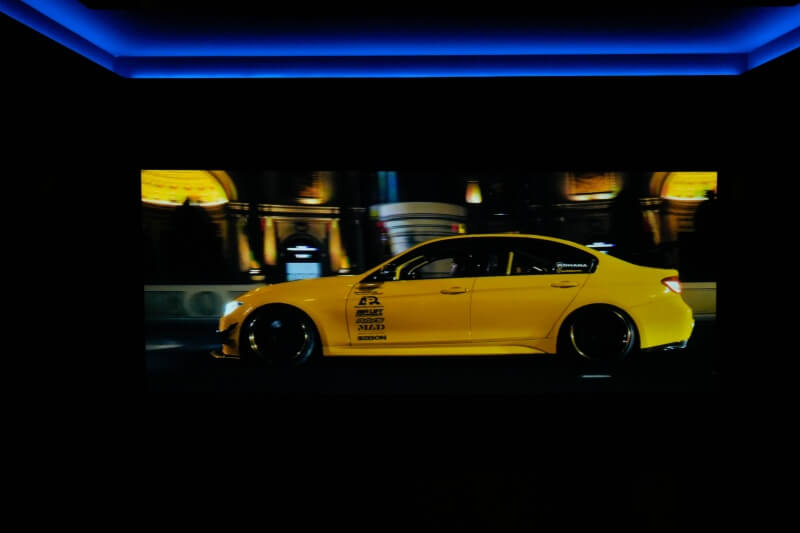
The S7 Ultra Max achieves an impressive 131 LP/mm resolution—about 40% higher than standard cinema projectors (93 LP/mm)—delivering visuals so sharp it’s like bringing a cinema screen into your home.
2.2 Chromatic Aberration & Glare Resistance: Stable Quality in Any Lighting
Chromatic aberration, where colored fringes appear around text or high-contrast edges, is a common issue in triple-laser projectors. The Gold Ring Lens suppresses this by 99.999%, producing edge purity comparable to professional monitors.
Its multi-layer coating also greatly improves glare resistance. Even in daylight with open curtains, where traditional projectors often appear washed out, the S7 Ultra Max maintains an 8000:1 native contrast ratio, preserving deep blacks and shadow detail.
3. Dual Assurance for Color Accuracy: Gold Ring Lens + Eclipse Optical Engine
Image quality is not only about sharpness—it’s also about color fidelity. The S7 Ultra Max achieves both through the synergy of the Gold Ring Lens and Dangbei’s proprietary Eclipse Optical Engine.
The Eclipse Optical Engine uses industrial-grade MCL + Qualas32*2 laser modules with 48 laser chips, producing 5800 CVIA lumens of brightness and an 8000:1 static black contrast ratio. The Gold Ring Lens acts as the precise bridge between light source and image, ensuring that every ray of light is accurately transmitted.
This combination demonstrates that true visual excellence doesn’t come from simply stacking specs, but from addressing optical fundamentals. Even industry veterans like Barco and JVC have spent decades refining this balance between optics and light engines.
Final Thoughts
By pairing a high-end, engineering-grade lens with an in-house optical engine, Dangbei has proven that home projectors can break past long-standing limitations without resorting to gimmicks. For users seeking uncompromising visual quality, the S7 Ultra Max offers not just an upgrade—it challenges the industry to re-evaluate the role of optical technology in home entertainment.
After all, in the ultimate race for image quality, it all comes down to perfecting “the first mile” of light transmission.
At present, the S7 Ultra Max is available only in the Chinese market. Suppose you’re looking for a high-performance home projector with excellent value for money that’s available internationally. In that case, you might consider the Dangbei DBOX02, which offers impressive image quality, smart features, and a competitive price point.
Related Reading:
Dangbei S7 Ultra Max In-Depth Review: A Smart Projector vs. Traditional JVC Showdown
Dangbei S7 Ultra Max Projector Specs Explained: Is This 4K Dolby Home Theater Worth It?