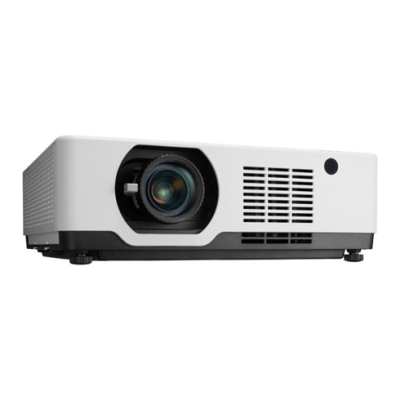
XGIMI’s HORIZON 30 Ultra Max has its first full lab review, and the headline number is brightness. German tech site Netzwelt, which published its test on the morning of November 15 Central European time, measured 4,440 lumens with the projector set up for accurate film color, the highest calibrated figure the outlet has recorded from any projector. The same lab measured JMGO’s Iris Ultra Max at 4,350 lumens three weeks earlier, so the two 4K/120 triple-laser flagships now have numbers taken on the same bench.
The review unit was a loaner from XGIMI. In the US the HORIZON 30 Ultra Max has sold for $3,499 since November 11, and XGIMI has already said it will drop to $2,999 on its own store and Amazon from November 19 to 30, as we reported when the HORIZON 30 Pro went on sale.
Close to the claim, with a catch
XGIMI rates the Ultra Max at up to 6,000 lumens. Netzwelt got 5,770 out of it in its brightest mode, a gap of about 4 percent, which is unusually close for a consumer projector. The catch is that this mode comes with loud fan noise and what the reviewer called a grotesque green tint, so it is a spec-sheet number rather than something anyone would watch. Moving to correct cinema color leaves somewhere between 4,500 and 5,000 lumens depending on the picture settings, and the best-looking configuration measured 4,440.
For a living-room projector, that calibrated number is the one that matters. Black on a projection screen can never be darker than the screen itself, so a room with lamps on is fought with light output, and the HORIZON 30 Ultra Max now has the strongest measured case for that job among the compact 4K models Netzwelt has tested. It is the same argument the Les Numériques lab made for the AURA 3 Max ultra short throw last week: XGIMI’s 2026 triple-laser engines are delivering close to what the box says.
The iris comparison JMGO wins
Both flagships use an adjustable iris to trade light for contrast, and this is where the same-lab numbers split the two clearly.
With the iris fully open, Netzwelt measured the XGIMI at just under 1,500:1. Its preferred setting was aperture 4, which cut output to a little over 3,400 lumens and raised contrast to about 2,600:1. The reviewer described the open-iris image as soft gray rather than deep black, which is unnoticeable with some light in the room but takes depth out of films in a fully dark home theater.
The JMGO Iris Ultra Max started lower, at 1,280:1 with its dual irises open, but at JMGO’s recommended aperture 5 it still put out 2,580 lumens and contrast jumped to 8,600:1. Put side by side, the XGIMI keeps roughly 800 more lumens in its best iris setting, and the JMGO delivers more than three times the contrast in its own. Netzwelt’s verdict on the JMGO’s HDR and shadow detail was close to unreserved; on the XGIMI it called contrast typical of affordable 4K projectors.
For a buyer that reduces to a room question. A family room with daylight or lamps on favors the HORIZON 30 Ultra Max. A dedicated dark room is where the Iris Ultra Max earns its place. Our spec comparison against JMGO’s cheaper Iris Ultra covers the hardware side.
Lag and the 120Hz setting that hides in the menu
Gaming is where the XGIMI pulls ahead again. Netzwelt measured 13 milliseconds of input lag at 60Hz, and under 8 milliseconds in the boost mode. The JMGO measured 15 to 19 milliseconds at 60Hz on the same bench, roughly halving at 120Hz. Many DLP projectors still sit above 60 milliseconds, so both are in a different class from the mainstream.
One practical warning from the review: out of the box, a console may only get 4K at 60Hz or 1080p at 120Hz. The fix is in the input settings, where the HDMI-EDID setting for that port has to be switched from HDMI 2.0 to HDMI 2.1. Both HDMI inputs handle 4K/120 with variable refresh rate, and one doubles as eARC.
Netzwelt also credits the faster refresh with something non-gamers will notice: a single-chip DLP projector draws red, green and blue in quick sequence, and running at double speed makes the rainbow effect harder to catch for people sensitive to it.
What the reviewer did not like
The complaints are physical rather than optical. The two built-in speakers sit on the front of the chassis below the lens, firing away from the audience. They sound full and clean, but lose fine detail, and Netzwelt found the side-mounted speakers on the Iris Ultra Max audibly better. Anyone spending this much will probably run audio out through eARC or the optical port anyway.
The rotating, tilting base is convenient for aiming but moves too easily, and the picture shifts when cables are plugged into the rear panel. XGIMI’s answer is a memory for up to five projector positions. The external power supply is a large brick on a short cable that the reviewer found always in the way. The printed manual is thin, which matters on a projector with this many picture controls.
The rest reads well. Measured power draw was 186 watts at full output, standby was 0.5 watts, and noise was 28 dB with only a faint hum, against 31 dB for the JMGO. Setup is quick, with autofocus, automatic keystone, obstacle avoidance, a 1.5x optical zoom and mechanical lens shift, which matter because optical adjustments keep full sharpness while digital keystone does not. Google TV, AirPlay and Google Cast are built in, alongside two USB-A ports, a headphone jack and Bluetooth.
Where the two flagships sit on price
JMGO’s global store lists the Iris Ultra Max at $3,299 against a $3,499 reference price, $200 below the XGIMI’s current US price, after the cut we noted when JMGO took the Iris Ultra Max to Japan. From November 19 that order flips if XGIMI’s Black Friday price lands as announced: $2,999 for the brighter projector, $300 under the JMGO unless JMGO answers.
In Europe the picture is different. XGIMI’s German store sold the Ultra Max at a discounted €2,999 at the start of November; on November 15 it lists only ceiling-mount and floor-stand bundles at €3,299, while the UK store lists the same bundles at £2,799. Netzwelt’s review lands just as the European discount has ended.
The open question is HDR. Netzwelt praised the XGIMI’s color in the Filmmaker mode but did not publish HDR tracking figures, and Les Numériques’ biggest complaint about the AURA 3 Max was poor HDR tone mapping that calibration could not fix. If the HORIZON 30 Ultra Max shares that weakness, the Iris Ultra Max’s contrast advantage will look larger still in the next round of reviews; if it does not, XGIMI’s brightness lead makes it the easier recommendation for most rooms at $2,999.